
Pelvic Ultrasound Scan
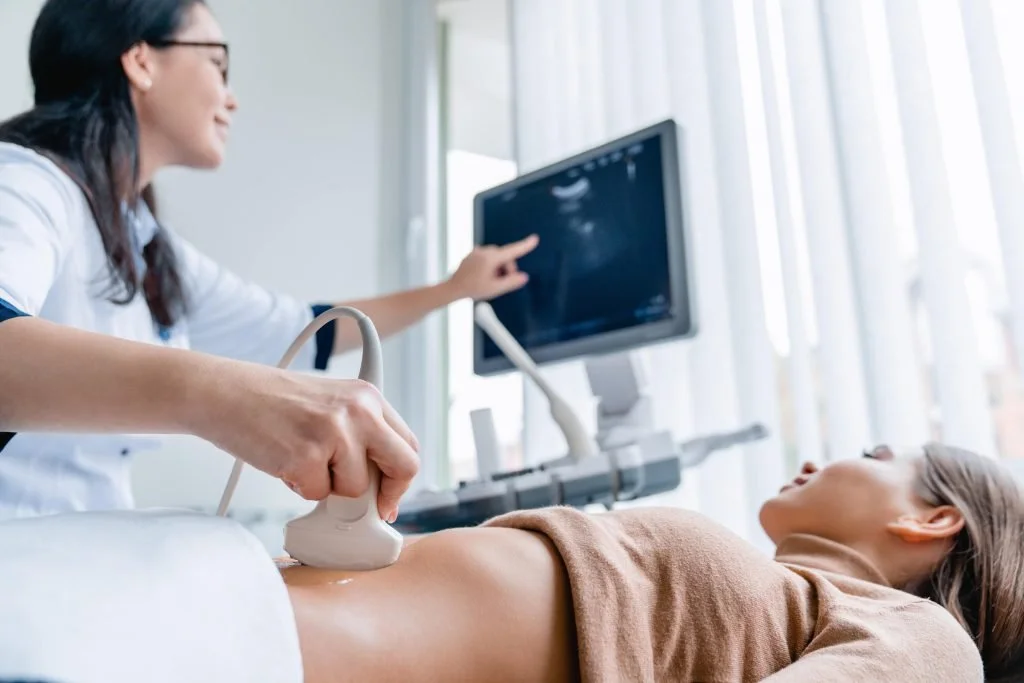
A pelvic ultrasound scan is a safe and non-invasive imaging tool used to assess the organs within the female pelvis. During the scan, we evaluate the uterus, endometrium, cervix, ovaries, and coil (IUCD) position.
£145
No GP referral required.
Location: Kensington Olympia, London W14 0SH.
(Inside Kings Dental Practice) Directions
Pelvic ultrasound scans are commonly recommended for women experiencing abnormal bleeding, spotting, pelvic pain, irregular periods, or those undergoing fertility assessment.
For women with a family history of ovarian cancer, regular monitoring can help track changes in the ovaries. While ultrasound cannot guarantee detection, it is a valuable tool for monitoring ovarian health and identifying potential abnormalities, such as cysts, which may impact fertility.
In addition, pelvic ultrasound can assist in fertility planning by helping estimate ovulation timing and assessing follicle development. Our experienced sonographers provide accurate imaging and detailed reports in a professional and supportive environment.
Book your private pelvic ultrasound in Kensington Olympia, London, with no GP referral required and fast digital results.
Why is a pelvic scan recommended?
A pelvic ultrasound may be suggested for:
Painful or heavy periods
Irregular periods or abnormal bleeding/spotting
Postmenopausal bleeding
Pelvic or lower abdominal discomfort, bloating, or pain
Family history of ovarian cancer
Symptoms of polycystic ovaries (PCO)
Uterine fibroids, cysts, or other pelvic masses
Checking the position of an intrauterine device (IUD/coil)
How is this scan performed?
A pelvic ultrasound scan can be carried out using transabdominal (through the lower abdomen) or transvaginal (internal) methods. Both approaches allow your clinician to examine organs such as the uterus, ovaries, and fallopian tubes.
While a transvaginal scan may sound unfamiliar, it is safe, routine, and generally well-tolerated. Our friendly team will guide you throughout the examination and ensure your comfort. After the scan, you can resume your normal activities immediately.
What preparations are needed for a pelvic scan?
For transabdominal scan, a full bladder helps improve imaging. Your clinician will apply a clear gel to your lower abdomen and move a wand-like transducer over the area. The procedure is painless but let your clinician know if you feel any discomfort.
For a transvaginal scan, a full bladder is not required. You will lie on your back with your knees bent, and a small, lubricated ultrasound probe will be gently inserted into the vagina. Most patients experience only minimal discomfort, and the procedure is safe and routine. Please inform us if you have a latex allergy or any concerns regarding the transvaginal scan.
Cancellation & Fees:
Less than 48-Hour Notice: If you cancel or reschedule your appointment with less than 48 hours' notice, You will be charged a £30 Fee.
More than 48-Hour Notice: In the event of a cancellation, any transaction or administrative fees charged to Ultramsono by the card provider will be deducted from any potential refund or charged to You / The customer. The Admin charge will be £5.
Frequently Asked Questions
-
A:
A pelvic ultrasound may be suggested for:
Painful or heavy periods
Irregular periods or abnormal bleeding/spotting
Postmenopausal bleeding
Pelvic or lower abdominal discomfort, bloating, or pain
Family history of ovarian cancer
Symptoms of polycystic ovaries (PCO)
Uterine fibroids, cysts, or other pelvic masses
Checking the position of an intrauterine device (IUD/coil)
-
A: We believe in fast answers. You will receive a comprehensive digital report on the same day as your scan, which you can easily share with your GP or specialist if required.
-
A:
For transabdominal scan, a full bladder helps improve imaging. Your clinician will apply a clear gel to your lower abdomen and move a wand-like transducer over the area. The procedure is painless but let your clinician know if you feel any discomfort.
For a transvaginal scan, a full bladder is not required. You will lie on your back with your knees bent, and a small, lubricated ultrasound probe will be gently inserted into the vagina. Most patients experience only minimal discomfort, and the procedure is safe and routine. Please inform us if you have a latex allergy or any concerns regarding the transvaginal scan.